Which e-commerce platform should you actually choose?
Choosing an e-commerce platform is not simple. At Commerce Mind we try to keep track of the market and have a process for choosing well and for the long term. It is not easy, but we are here for you if you need support. There are no perfect choices.
At Commerce Mind we try to stay in continuous contact with the relevant e-commerce platforms to keep ourselves up to date on what is happening. But it is a demanding task. I recently did a quick estimate and, in under ten minutes, found more than 30 platforms actively selling in the Nordics. And I probably missed half of them.
The Nordic market for e-commerce platforms is fragmented. There is a wealth of old, new, small and large platforms. On top of that there are platforms from South America, the US and Asia sniffing at our market. They tend to focus on continental Europe (mainly Germany and the UK) but happily test the Nordic market in parallel, quietly circling in search of suitable customers and partners.
What sets the platforms apart? Which one fits your company? How are you supposed to choose? We have previously written about the preparation you should do before you even start meeting platforms and vendors, which mistakes are easy to make, and a fair bit about headless and composable commerce and so on. You can dive as deep as you like into this topic, which we find endlessly interesting. That said, remember that the best platform can be "written to pieces" by a poor implementation. The reverse, where a vendor given the right conditions to implement an older traditional platform still delivers, also happens.
The truly large global players are fighting to appear and gain ground in the Gartner Magic Quadrant for e-commerce, ideally in the upper right corner. But we do not think you should get fixated on that map unless you are a global American company with many billions in revenue. Instead we have built a process for selecting a platform that starts from a combination of your e-commerce strategy, omnichannel requirements, technical needs and capabilities, growth ambitions and so on. For us it is about finding platforms and partners that fit. We do not think there is one solution that fits everyone, but there is something for everyone.
And remember: there are no perfect choices. There are pros and cons with every platform, and our goal together with our clients is to make the most informed and long-lasting choice possible. Reach out for inspiration and support.
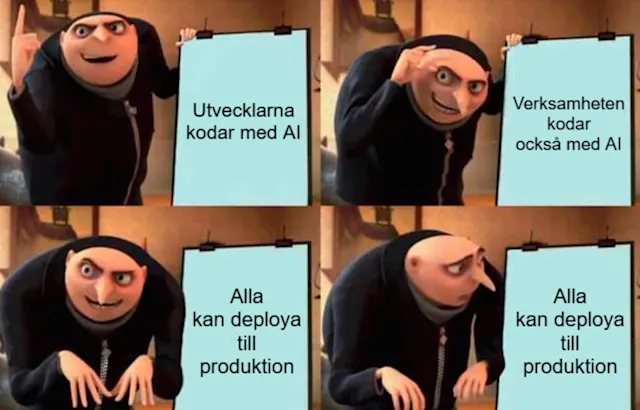
AI does not only make development faster, it moves the capability out into the whole organisation. Suddenly anyone can build and change things in the systems. It is enormously powerful, but combined with old ways of working it leads to either chaos or no effect at all. Here is how you lead the shift from tree-tender to forest ranger before entropy runs away from you.
Technical debt is more than a technical concept, it is a business-critical reality that affects everything from time-to-market to customer experience. In e-commerce, where every millisecond and every click counts, the choices you make in your technical platform can have far-reaching consequences. When quick fixes are prioritised over long-term durability, an invisible but growing debt is built up. It affects not only development speed and stability, but at worst can slow the company's ability to innovate and compete. To face the future the right way, technical debt has to be understood, quantified and managed as the strategic investment it actually is.
For Swedish retailers there are plenty of ways to meet this threat by building on what the Chinese giants cannot offer: strong local brand stories, product safety and sustainability as competitive advantages, and a presence that ties digital and physical commerce together. Temu has no stores. Yet.