Tobias Bergström at Commerce Mind was recently interviewed by the e-commerce company Litium for their newsletter to their clients. He was asked, as a fully independent e-commerce expert, how he sees the development of B2B e-commerce over the slightly unreal horizon of 5 to 10 years. We thought we would share his takes here.
How do you think advances in digital technology will affect the B2B e-commerce landscape in the coming five years?
As I see it, the B2B e-commerce transformation has just begun. Technology development is a driving factor, but as a society we are now going through a rapid digital change that will make the industrial revolution look like a minor historical adjustment. We cannot even imagine the changes ahead of us. Trying to predict the B2B e-commerce landscape in five years is like giving a weather forecast for next year…
But in five years, I do not think B2B e-commerce will be regarded as something potentially new and cool, but a very natural part of our daily lives at work and an established way to do business between companies. My guess is that B2B commerce will not be handled by a small team of experts sitting in "the digital team" but be an integrated part of many people's daily work. And that digital sales is an integrated core competence in the company.
There are two big drivers (or incentives) for companies to dive into B2B e-commerce, and depending on which driver you focus on, your company will develop accordingly:
Operational efficiency - Try to minimise the transaction cost per order and free up time for staff who today manually handle orders, or
Sales growth - Drive sales and market share by aggressively attracting new customer segments, entering new geographic markets, selling new categories and so on.
If your focus is operational efficiency, EDI and similar transaction channels will probably be just as important as the e-commerce channel. If your focus is to drive sales, you need to acquire many more competences and experiences before you see real results. Your focus on cost vs sales will to some extent define you as a company in the future.
What are the emerging trends and technologies likely to shape the future of B2B digital commerce 10 years from now?
Channel disruption: Everyone in the distribution chain is trying to take on everyone else's roles. Already today B2B retailers and distributors create their own brands and manufacturing partnerships to increase their own margins and get a slightly bigger slice of the margin cake, while manufacturers and brand owners open direct-to-consumer sales channels (e-commerce and physical stores). I think we will see the "cold war" play out in many industries, where everyone strives towards the top of the food chain, but at the same time no one wants to wake the sleeping bear and destroy established relationships with customers and vendors and thereby risk their current business.
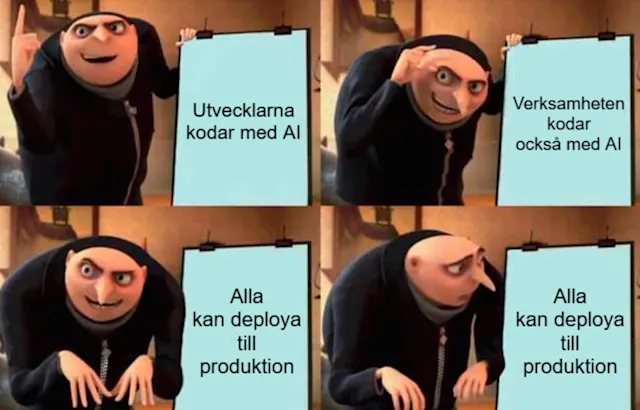
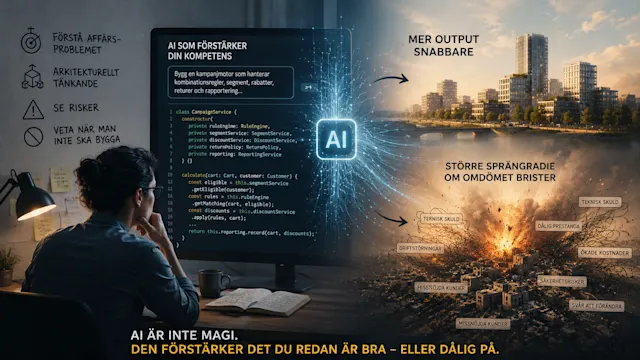
AI: I guess we are all a bit tired of newly hatched AI evangelists trying to spread their message on, for example, LinkedIn with broad and general statements. But AI will really have a profound impact on how we do e-commerce in the future. And has it already today even if we do not see or think about it. An AI is fantastic for things like price optimisation, stock replenishment, personalisation, translation, content creation, relevance optimisation, campaign management, fraud detection and many, many other things. I often refer to Amara's law when it comes to digital trends (and AI specifically): "We tend to overestimate the effect of a technology in the short run and underestimate the effect in the long run." At the moment we are overestimating the effect in the short term. 😊
Do you think a B2B company will survive without digital channels 10 years from now?
It is actually an uninteresting theoretical question, because it is not really a choice for 99% of companies. Most companies will be forced to sell through digital channels either because customers will demand it, or because all your competitors do it. The real question is whether you can survive without truly embracing digital channels. But sure. Some will survive anyway. But they will probably struggle in parts of their value chain.
Your dependence on digital channels depends on your type of business and what kind of product you sell. If you are GE and have the best MRI machine on the market, or if you are Airbus and sell commercial aircraft, relationship selling will continue to define your success as a company. But even there, for example, spare parts sales and aftermarket service can fit perfectly well for an e-commerce channel… On the other end of the scale, there will absolutely be small B2B service companies that will not feel the need to create e-commerce. Like your local accounting firm, for example.
To summarise: really complex products that require a big investment from the customer will most likely survive, but can (and will) still benefit from e-commerce in parts of their business. Very small B2B service companies will have less need to compete with e-commerce as a sales channel.
What are the potential disruptions or innovations that could come from startups and new players in B2B e-commerce, and how can established companies remain competitive in this developing landscape?
The biggest disruption, I think, will not be some new SaaS services from smaller startups, but rather the emergence of niche B2Bmarketplaces. Just like with standardised B2C products, marketplaces that connect the many sellers and the many buyers will be at the top of the food chain and own the customer interaction and relationship. Products like books, music, travel and fashion have over the past 20 years moved more and more to marketplaces like Amazon, Expedia, hotels.com, Spotify and Zalando. I find no sensible reason this development should stop with B2C products. I feel fairly sure that many niche B2B marketplaces will pop up handling for example construction products, financial services, medical products, commodities, office supplies and so on. And I think the creation of B2B marketplaces will bring a lot of power struggles in the distribution chain. Who will take on the marketplace role in your industry? You? An external player? One of the existing manufacturers or brand owners? Your worst competitor? A retailer?
If you are not keeping tabs on the development of marketplaces, you can end up in an unfavourable position in the distribution chain and see your margins disappear because of commission to a marketplace run by your competitor.
How can B2B companies in the Nordics use analytics and data-driven insights to optimise their e-commerce strategies, improve customer experience and drive growth?
I meet many B2B companies that see e-commerce as a project. When the project is delivered they expect it to magically generate sales and margins by itself. Forever. Just because it exists. Rarely does e-commerce follow the same kind of planning, KPI analysis, goal setting and follow-up as the traditional sales processes (field and inside sales). I really think B2B companies need to start seeing e-commerce as a strategic sales channel, and that means integrating it into the strategic planning cycle, placing it in the right organisational context and being very clear about the long-term business goals and KPIs. When that has been done, analytics and data-driven insights will be able to come into play and can help you navigate towards your goal.
Is there anything else you want to add?
No. I have already talked too much. 😊
What are your tips to B2B companies today to be as successful as possible in 2030?
Make digital sales part of your daily life. Compare and treat it the same way as all your other sales channels. Set goals, plan strategically, build business cases for investments in e-commerce, set goals and KPIs, follow up, adjust accordingly.
Make sure your e-commerce abilities, competences and experiences are widely spread across your organisation, and not just sitting in an isolated expert team.
Be brave. No one has the exact formula for success with B2B e-commerce (yet). Things will be clearer in 2030, but the winners will be those who dared to try and sometimes fail.
Be persistent and "play the long game". Look at e-commerce as a recurring investment and not a one-off cost. Based on the long-term business case, budget also for business growth and the unknown future needs, and not just for the IT project with three years of depreciation.
Describe the future of digital commerce in B2B in one word.
Transition - Just like from a caterpillar to a butterfly. Creating e-commerce success for a traditional B2B company will take time, be a bit messy and feel a bit strange and uncomfortable. 😊
If you have questions for Tobias you find him here on LinkedIn.